
Waller Parole and Probation
Parole, mandatory supervision, and probation are not interchangeable labels. The Texas Board of Pardons and Paroles decides parole matters. The TDCJ Parole Division supervises people released on parole or mandatory supervision. A Waller County court orders community supervision, commonly called probation, and the Waller County Community Supervision and Corrections Department administers that local case.
| Supervision | Who creates it | Waller County record path |
|---|---|---|
| Parole | Texas Board of Pardons and Paroles | TDCJ offender search, IVSS, and Conroe District Parole Office |
| Mandatory supervision | Texas law and Board review rules | TDCJ and IVSS, then Conroe DPO |
| Community supervision / probation | Sentencing court | Waller court cause and Waller CSCD in Hempstead |
A county jail release record answers when and how someone left Waller custody. It does not by itself establish the terms of state parole or a probation order. Likewise, a supervision record should not be treated as the booking-out record. The Waller County released-inmate search guide explains how to pair custody and court sources.
Verify Waller Post-Release Supervision
Start with the legal event, not a name-only assumption. Shared names, aliases, and separate cases can lead to a wrong match. A TDCJ or SID number is the strongest key for state records; a Waller cause number is the strongest key for a local court case.
- Identify the custody path. Determine whether the Waller court committed the person to TDCJ, imposed community supervision, or whether the person only left county jail while a case remained pending.
- Check the official state record. For a TDCJ sentence, use the TDCJ offender search. Match the full name with the TDCJ or SID number and review parole eligibility, review status, decision information, and release fields in their proper context.
- Check IVSS for the state event. The TDCJ Integrated Victim Services System can display Expected Release Date and, when recorded, an actual Release Date. It also supports custody and supervision notifications.
- Use the court for probation. Locate the Waller cause in Odyssey, identify the sentencing court, and obtain the actual judgment or community-supervision order from the clerk. The docket can point to the case, but the signed order controls its terms.
- Contact the responsible office. Route a parole or mandatory-supervision matter to Conroe DPO. Route a Waller probation matter to Waller CSCD. Give the official identifier and ask only for information the office may disclose.
- Confirm county release separately. If the question includes when someone left Waller County Jail, request the sheriff’s booking-out, release, or transfer record. A transfer to TDCJ is not a community release.
Why Waller Uses Two Offices
Waller County has a distinctive geographic split. The official TDCJ county-to-office directory assigns Waller parole supervision to the Conroe District Parole Office in Montgomery County. Local adult probation, however, is handled by the Waller County CSCD in Hempstead. The office outside the county is not an error. It reflects TDCJ’s regional parole structure.
This split matters when a release record uses broad terms such as “supervision” or when a family member only knows that the person must report. Conroe is the route for TDCJ parole and mandatory supervision. Hempstead is the route for a probation or community-supervision order entered by a Waller court. Calling the wrong office can produce a truthful “no record” response that says nothing about the other system.
The images below show the two official routing sources. The TDCJ county assignment directory places Waller under Conroe.
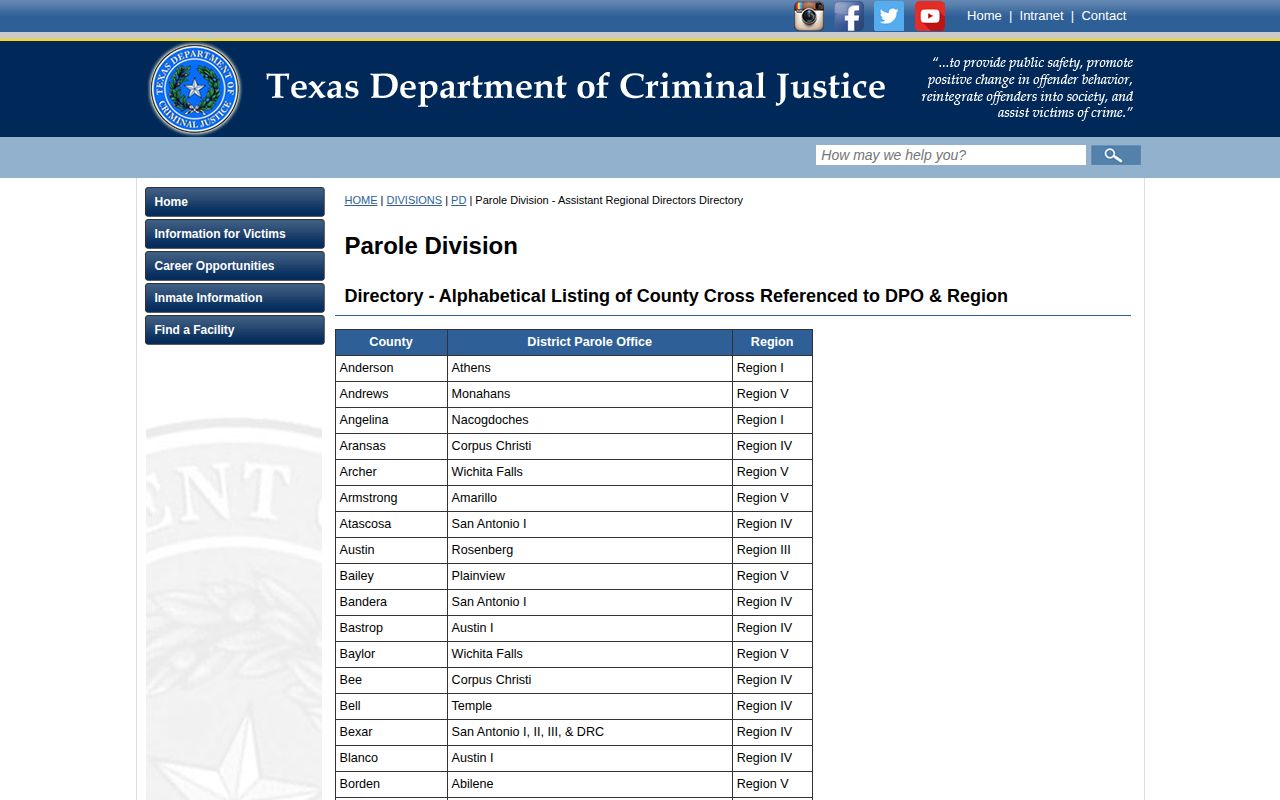
That directory is the proper starting point for state supervision, while the county’s separate page governs local probation.
The Waller Adult Probation page identifies the county community-supervision office.
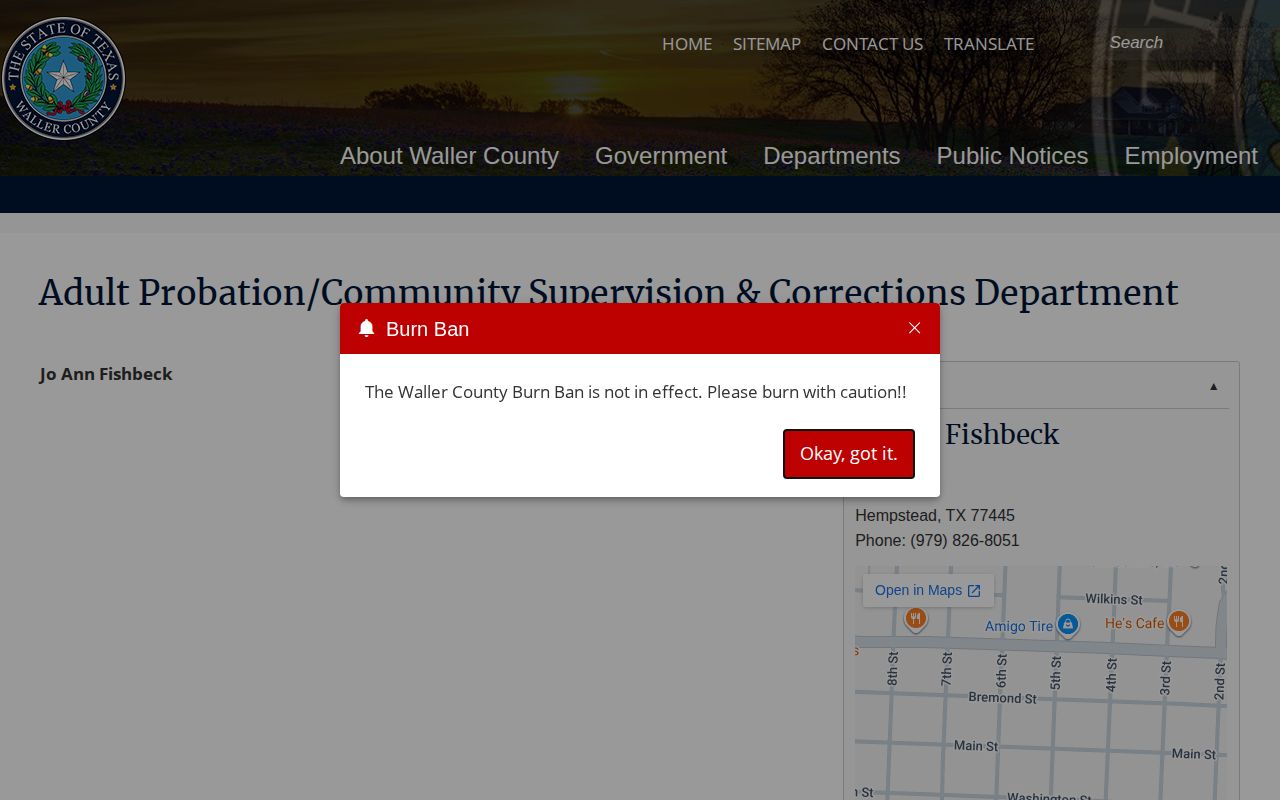
Together, the sources prevent parole cases from being misrouted to county probation and vice versa.
Waller Supervision Contact Routes
State parole and mandatory supervision
TDCJ Conroe District Parole Office
4301 South Loop 336 East, Conroe, TX 77301
936-756-0420
View Region I district office information
Local community supervision
Waller County CSCD / Adult Probation
925 5th Street, Hempstead, TX 77445
979-826-8051
View the official county page
Office staff may limit what they disclose. Have the TDCJ/SID number or Waller cause number ready. Do not ask one office to interpret the other agency’s record. For the terms of probation, request the signed court order. For parole conditions or reporting, use TDCJ Parole Division and the assigned officer or office.
Texas Parole Review Records
Ordinary Texas parole consideration is not a public courtroom-style hearing with a calendar. The Board explains that panel members review and vote files individually. TDCJ identifies initial cases in advance of eligibility, an Institutional Parole Officer prepares a summary, and a three-member panel votes in sequence. Two matching votes determine the result.
The practical schedule and result are the offender record’s review status, last decision and date, and next scheduled review. A review month is not a hearing appointment. A denial generally provides a future review point, subject to the intervals allowed by Government Code §508.141(g). Revocation proceedings after alleged supervision violations are different and may involve preliminary or revocation hearings.
The official TDCJ search exposes the state record fields used for this review.
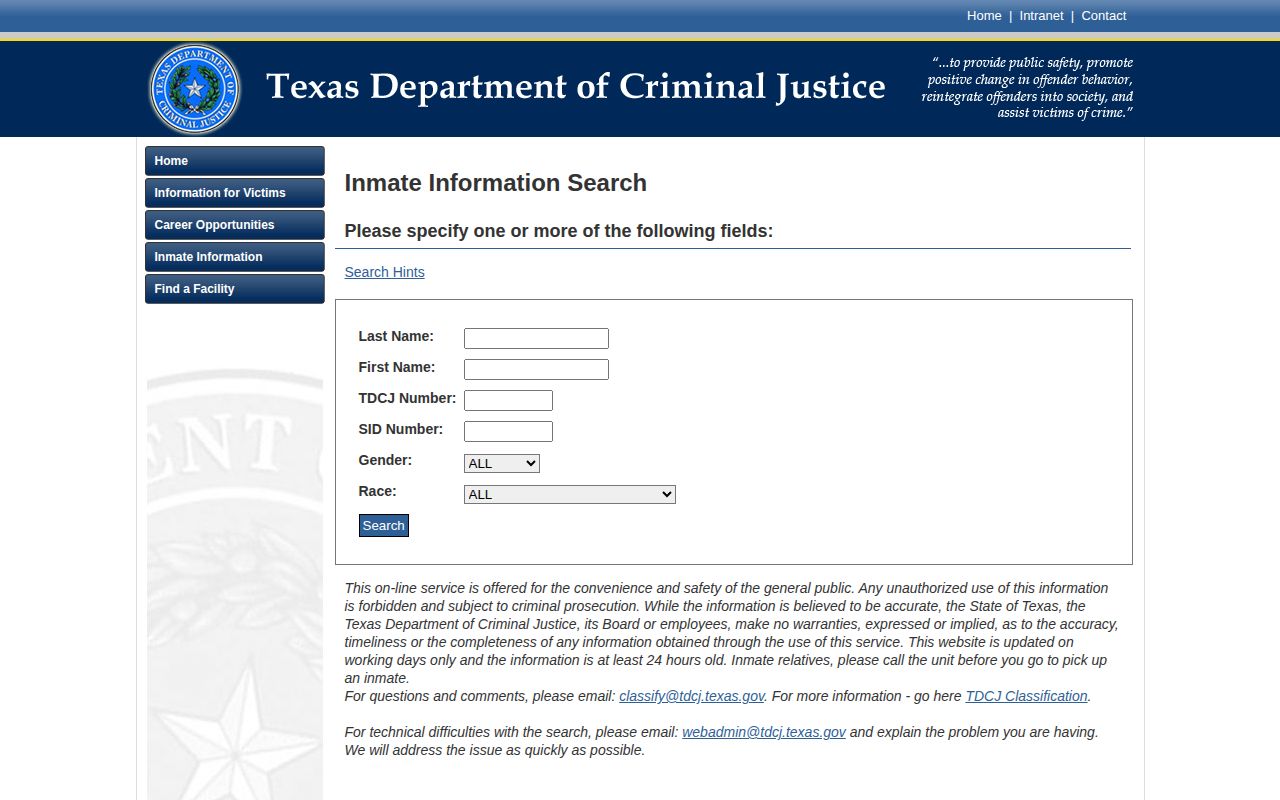
Read each date by its label. A projected date, review date, decision date, and actual release date describe different stages.
Reading Waller Supervision Terms
A supervision label alone does not explain the conditions. Probation conditions come from the sentencing court’s order and later modifications. Parole conditions flow from the Board and TDCJ supervision process. Both may change through an official action, so an old docket entry or copied notice may be incomplete.
For probation, use Odyssey to identify the cause and court, then request the signed judgment, community-supervision order, or modification from the appropriate clerk. Waller’s District Clerk notes that public document images are not available through its portal, so the online case history may be only the first step. For parole, use current TDCJ and IVSS data and the assigned DPO.
A person may leave Waller County Jail on bond while a criminal case continues, with no parole or probation yet. Another person may leave the jail for TDCJ rather than the community. A third may complete confinement but remain on a court order. These outcomes look similar when a name disappears from the current roster. The sheriff’s release or transfer record, court order, and supervising-agency record should be read as a sequence.
Confirm Waller Release Status
Use the source that owns each event. The sheriff owns the Waller County Jail custody log. The court owns its judgment and supervision order. TDCJ owns state confinement and supervision data. The Board owns parole decisions. If those sources appear to conflict, compare their dates and scope before treating one as wrong.
For time-sensitive state changes, register through VINE and IVSS notification guidance, but regard an alert as a prompt to verify. A notification, projected date, parole vote, posted bond, or missing roster entry does not by itself prove physical release into the community. Obtain the affirmative record from the agency responsible for the event.
Waller Supervision Record Chain
A supervision search is strongest when the records are assembled in event order. Begin with the Waller judgment because it shows whether the court imposed community supervision or committed the person to state custody. If the public Odyssey history identifies the cause but does not display the signed document, request the judgment from the proper clerk. That document prevents a county probation case from being mistaken for TDCJ parole.
For a state sentence, match the judgment to the TDCJ record with the SID or TDCJ number. Review status and Board decision fields explain the consideration stage. The projected release field remains a calculation. IVSS can then supply Expected Release Date and, once recorded, an actual Release Date. After state release, the Conroe DPO assignment identifies the office responsible for Waller County parole or mandatory supervision.
For local probation, the Waller CSCD route begins with the court order. Later modifications, revocation motions, or judgments can alter the case, so a single old docket event may not describe current supervision. Ask the clerk for the controlling signed record and use the CSCD for information it is authorized to provide. If county jail time was also served, pair the order with the sheriff booking-out record.
This chain also resolves apparent conflicts. A sheriff record may show departure from county custody on one date, while a TDCJ record starts state custody afterward. A Board vote may precede physical release, and supervision can begin only after the release event. Labeling each record by agency and date preserves that sequence instead of forcing several distinct events into one status.